Coins
|
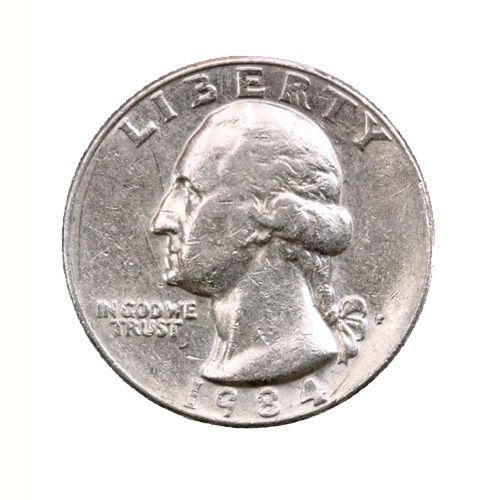
The quarter, valued at 25 cents, has one of the richest and most varied histories among U.S. coins. Its journey reflects not only changes in design and artistry but also the evolving identity of the nation itself. Since its introduction in 1796, the quarter has undergone multiple transformations, each era leaving behind a distinct legacy that collectors and historians continue to study today. Early Quarters (1796–1838)The first quarters were struck in 1796, featuring the Draped Bust design with Liberty on the obverse and a small eagle on the reverse. These coins were made of silver, as precious metals were the foundation of early American currency. In 1804, the reverse was updated to a heraldic eagle, symbolizing strength and unity. These early quarters were produced in limited numbers, making them rare and highly prized today. Seated Liberty Quarters (1838–1891)In 1838, the Seated Liberty quarter was introduced, showing Liberty seated on a rock holding a shield and staff. This design lasted for more than 50 years, making it one of the longest‑running coin designs in U.S. history. Over time, small modifications were made, such as adding arrows or rays to indicate changes in weight or composition. The Seated Liberty design reflected the ideals of vigilance and freedom during a period of expansion and conflict in the United States. Barber Quarters (1892–1916)The Barber quarter, designed by Charles E. Barber, replaced Seated Liberty in 1892. Liberty was depicted wearing a laurel wreath, a classical symbol of victory. The reverse featured a heraldic eagle, similar to earlier designs. Barber quarters were widely circulated but often criticized for their plain appearance compared to more artistic designs. Standing Liberty Quarters (1916–1930)In 1916, the Standing Liberty quarter was introduced, designed by Hermon A. MacNeil. Liberty was shown standing with a shield and olive branch, symbolizing both defense and peace. The design was striking but controversial, as the original depiction of Liberty was partially unclothed. Modifications were made in 1917 to cover her figure more modestly. The Standing Liberty quarter is considered one of the most beautiful coins in U.S. history, though it was only minted for 14 years. Washington Quarters (1932–Present)The modern era of the quarter began in 1932, when the Washington quarter was introduced to commemorate the 200th anniversary of George Washington’s birth. Sculptor John Flanagan’s design featured Washington’s profile on the obverse and an eagle on the reverse. This design remained largely unchanged until 1999, when the 50 State Quarters program began. The State Quarters program was a landmark in U.S. coinage, issuing unique designs for each of the 50 states between 1999 and 2008. It was followed by the America the Beautiful series (2010–2021), which featured national parks and landmarks. These programs transformed the quarter into a storytelling medium, celebrating the diversity and history of the nation. In 2022, the Mint launched the American Women Quarters program, honoring influential women from U.S. history. This ongoing series continues to expand the quarter’s role as both currency and cultural artifact. LegacyThe quarter’s history reflects the balance between tradition and innovation. From its silver origins to its modern copper‑nickel composition, from Liberty to Washington to commemorative designs, the quarter has evolved alongside the nation. It remains one of the most widely circulated coins, valued not only for its utility but also for its ability to capture the spirit of America across generations. |
|---|