Coins
|
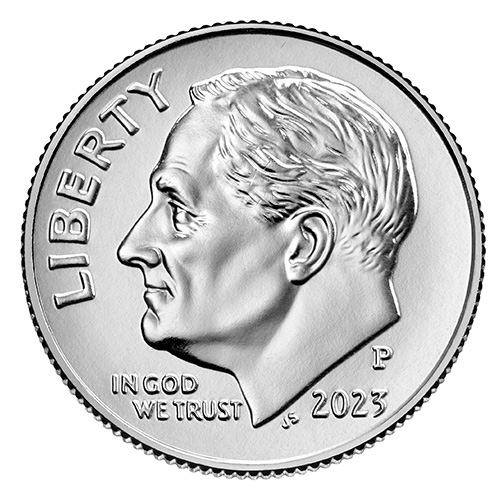
The dime, though small in size, holds a unique place in American life and culture. Its value of ten cents makes it a coin that often slips into transactions almost unnoticed, yet it plays a crucial role in balancing the everyday rhythm of commerce. Unlike the penny or the nickel, which are often collected in jars or used sparingly, the dime tends to circulate quickly. It is the coin that rounds off payments, fills in the gaps when exact change is needed, and quietly ensures that transactions are precise. In this way, the dime is less about being noticed and more about being indispensable. One of the most striking aspects of the dime is how it represents efficiency. Because it is worth ten cents, it condenses value into a small, lightweight form that is easy to carry and use. A handful of dimes can add up quickly, making them practical for small purchases or for saving in coin rolls. For many people, dimes are the coin most often used in vending machines, laundromats, and parking meters, where their compact value makes them the perfect fit. They are also commonly used in coin‑operated devices that require exact amounts, reinforcing their role as a coin of precision and utility. Beyond its practical use, the dime has woven itself into language and culture. Expressions like “a dime a dozen” suggest abundance and low value, while “turn on a dime” conveys agility and sharpness. These phrases show how the dime has become more than just currency—it is a metaphor for everyday experiences. The coin’s small size and exact value make it a natural symbol for things that are plentiful, quick, or efficient. In this way, the dime extends beyond the pocket and into the way people describe the world around them. The dime also carries a sense of thrift and discipline. Saving dimes, whether in rolls or jars, has long been a practice for those who value small contributions adding up over time. Unlike pennies, which are often dismissed, dimes accumulate quickly and can represent meaningful savings. For children learning about money, the dime is often the first coin that teaches the concept of multiples—ten pennies equal one dime, and ten dimes equal a dollar. This simple arithmetic makes the dime a teaching tool as well as a financial instrument, bridging the gap between small change and larger sums. In daily life, the dime is often overlooked because of its size, yet it is one of the most practical coins to carry. It is light, easy to store, and adds up faster than pennies or nickels. For people who rely on coins for everyday tasks—whether feeding a parking meter or buying a snack from a vending machine—the dime is often the coin that makes the difference. Its role is subtle but essential, ensuring that transactions can be completed smoothly and efficiently. The dime’s cultural presence also ties it to themes of resilience and leadership. Because it honors Franklin D. Roosevelt, the coin carries with it associations of strength during difficult times. Roosevelt’s connection to the March of Dimes campaign further reinforces the coin’s symbolic role in public health and collective effort. In this way, the dime is not only a piece of currency but also a reminder of how small contributions can lead to significant change. Ultimately, the dime represents balance. It is small yet valuable, simple yet essential, overlooked yet indispensable. It embodies the idea that even the smallest things can carry weight and meaning. Whether used in everyday transactions, saved for future needs, or invoked in language and culture, the dime continues to play a quiet but powerful role in American life. |
|---|