Coins
|
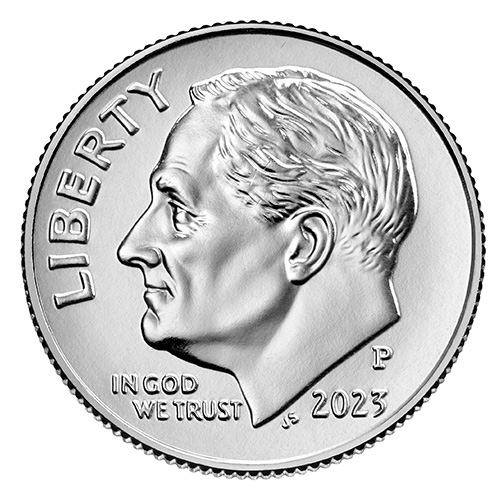
The U.S. dime features Franklin Delano Roosevelt, the 32nd president of the United States, on its obverse (front). Roosevelt has appeared on the dime since 1946, the year after his death, making him one of the longest‑serving figures on American coinage. His portrait was chosen not only to honor his leadership during the Great Depression and World War II but also to commemorate his personal connection to the March of Dimes, a national campaign he championed to fight polio. Roosevelt’s presence on the dime is deeply symbolic. He was the president who guided the nation through some of its most difficult years, introducing the New Deal programs that reshaped American society and leading the country through the global crisis of World War II. His image on the dime reflects resilience, determination, and the idea that small contributions—like a dime donated to the March of Dimes—can collectively achieve monumental change. The design was created by John R. Sinnock, the Chief Engraver of the U.S. Mint at the time. Sinnock’s portrait of Roosevelt is simple yet dignified, showing him in profile facing left. The inscriptions “LIBERTY” and “IN GOD WE TRUST” accompany his likeness, along with the year of minting. This design has remained largely unchanged for nearly 80 years, a testament to Roosevelt’s enduring legacy in American history. Roosevelt’s association with the dime also highlights the coin’s cultural role. The March of Dimes campaign encouraged Americans to donate small amounts—literally dimes—to fund research and treatment for polio. This grassroots effort ultimately contributed to the development of the polio vaccine, saving countless lives. By placing Roosevelt on the dime, the Mint created a lasting reminder of how collective action, even in small increments, can lead to transformative outcomes. |
|---|