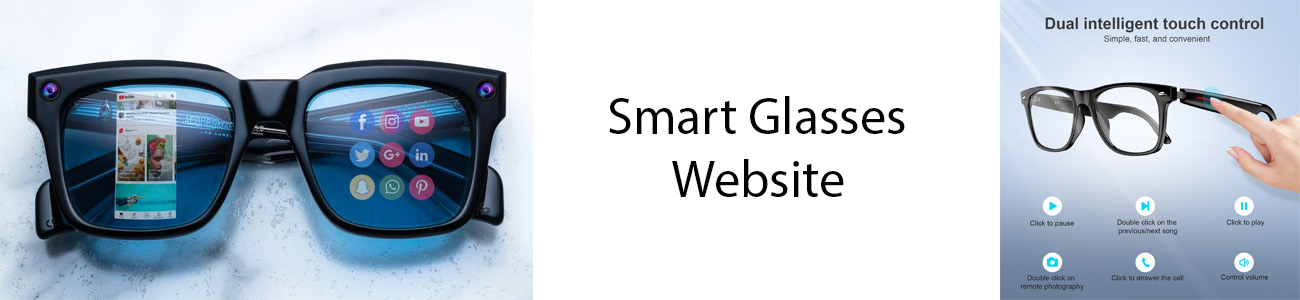
Navigation on smart glasses works by bringing turn-by-turn guidance directly into your field of view or through clear, open-ear audio prompts. Most consumer models, such as the
, use "smartphone mirroring," where the glasses connect via Bluetooth or Wi-Fi to your phone's GPS and mapping apps like Google Maps or Apple Maps. This setup allows the glasses to act as a hands-free external display, providing a "heads-up" experience that eliminates the need to glance down at a physical phone. Advanced models also incorporate internal sensors—including accelerometers, gyroscopes, and magnetometers (digital compasses)—to track your head orientation. This ensures that visual directions, such as floating arrows or mini-maps, stay accurately aligned with your physical path even as you turn your head.
Meta Ray-Ban Display
The navigation experience typically varies depending on the hardware:
- Visual HUD Navigation: On models with integrated displays like the , you see high-contrast overlays including turn-by-turn arrows, mini-maps, and distance indicators in your peripheral vision.
- Audio-Only Guidance: Audio-centric frames like standard
provide spoken directions directly into your ears, allowing you to follow a route while keeping your eyes completely on your surroundings.Ray-Ban Meta glasses
- AI Contextual Awareness: Newer AI-powered glasses can even recognize landmarks or storefronts through the built-in camera to provide more intuitive guidance, such as saying "Turn right at the museum" rather than just providing a distance.