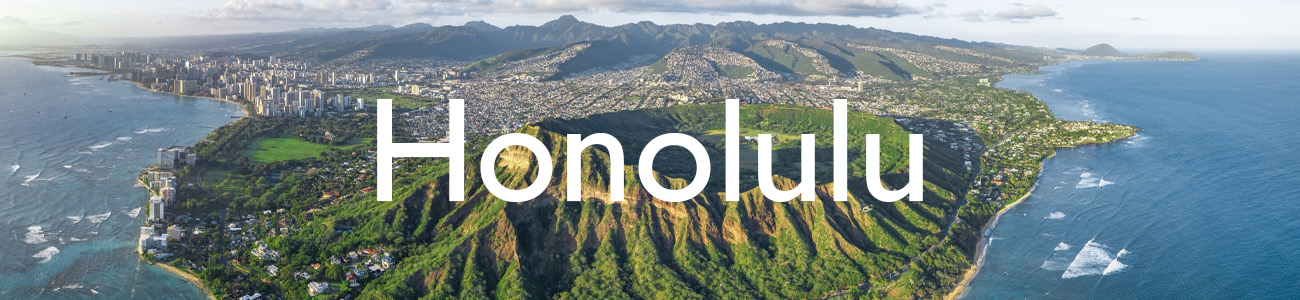
The following is an excerpt of Honolulu's history from Wikipedia: Evidence of the first settlement of Honolulu by the original Polynesian migrants to the archipelago comes from oral histories and artifacts. These indicate that there was a settlement where Honolulu now stands in the 11th century. After Kamehameha I conquered Oʻahu in the Battle of Nuʻuanu at Nuʻuanu Pali, he moved his royal court from the Island of Hawaiʻi to Waikiki in 1804. His court relocated in 1809 to what is now downtown Honolulu. The capital was moved back to Kailua-Kona in 1812. In November 1794, Captain William Brown of Great Britain was the first foreigner to sail into what is now Honolulu Harbor. More foreign ships followed, making the port of Honolulu a focal point for merchant ships traveling between North America and Asia. The settlement grew from a handful of homes to a city in the early 19th century after Kamehameha I chose it as a replacement for his residence at Waikiki in 1810. In 1845, Kamehameha III moved the permanent capital of the Hawaiian Kingdom from Lahaina on Maui to Honolulu. He and the kings who followed him transformed Honolulu into a modern capital, erecting buildings such as St. Andrew's Cathedral, ʻIolani Palace, and Aliʻiōlani Hale. At the same time, Honolulu became the islands' center of commerce, with descendants of American missionaries establishing major businesses downtown. Despite the turbulent history of the late 19th century and early 20th century—such as the overthrow of the Hawaiian monarchy in 1893, Hawaii's annexation by the U.S. in 1898, a large fire in 1900, and the Japanese attack on Pearl Harbor in 1941 - Honolulu remained the Hawaiian Islands' capital, largest city, and main airport and seaport. |
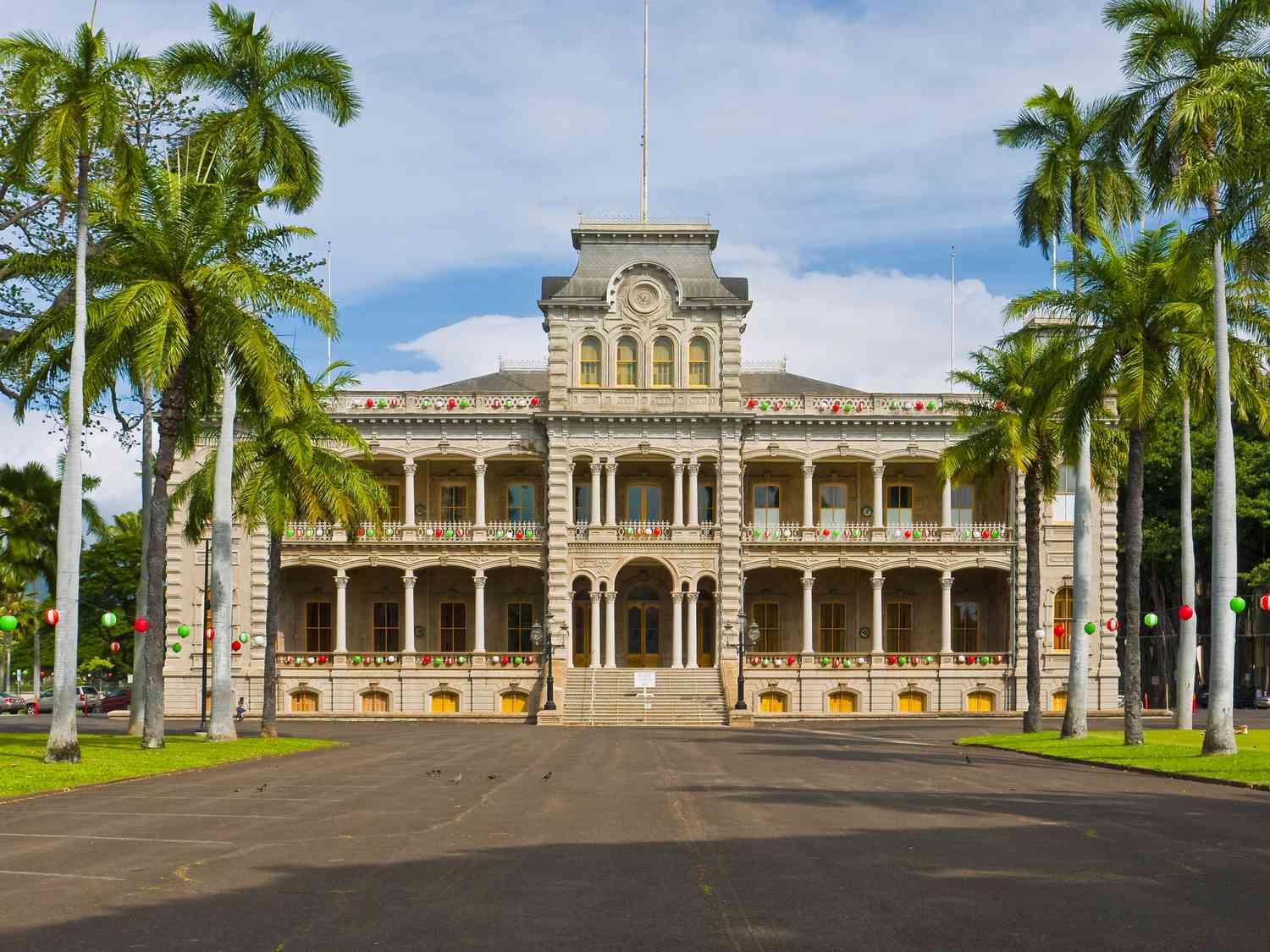
'Iolani Palace, one of Hawaii's last royal residences |