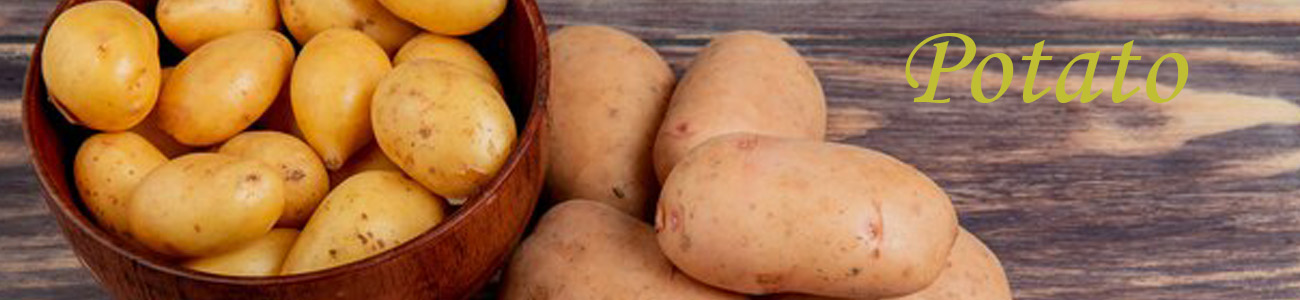
A potato is an edible, starchy tuber that grows on the South American plant Solanum tuberosum. It is a versatile vegetable that can be boiled, baked, mashed, or fried, and is a staple food crop worldwide. Potatoes are classified by their shape, skin color, and starch content, which determines their best culinary uses. Botanical classification: Potatoes are the starchy, underground stems of an erect South American herb from the nightshade family. Nutritional value: They are naturally fat-free and cholesterol-free, providing nutrients like vitamin C. However, how they are prepared affects their health profile; baking and boiling are healthier than deep-frying. Culinary uses: Potatoes are used in a wide variety of dishes, including baked potatoes, french fries, potato salad, soups, and stews. Types: Floury potatoes: Have high starch content and are ideal for baking and mashing (e.g., Russets). Waxy potatoes: Have dense, moist flesh and hold their shape well when cooked, making them suitable for boiling, roasting, and potato salads (e.g., Red Bliss, New Potatoes). All-purpose potatoes: Have a texture in between, making them versatile for many preparations (e.g., Yukon Gold). History: Potatoes were domesticated in South America by the Inca, introduced to Europe in the 16th century, and became a major food staple that helped fuel a population boom in Europe. The Great Irish Famine in the 1840s was caused by a disease that devastated potato crops, which were a primary food source for the Irish population. |