Home About History Paralympics Emblems Torch Ceremonies Program Venues Aquatics Athletics Sport Info Accessiblity Policy
Predictions Village Ticketing Travel Accommodations Volunteer and Jobs Careers Partners and Sponsors Press FAQs Promo Video Athletes Countries Pricing
E-Shop Schedule Contact Us

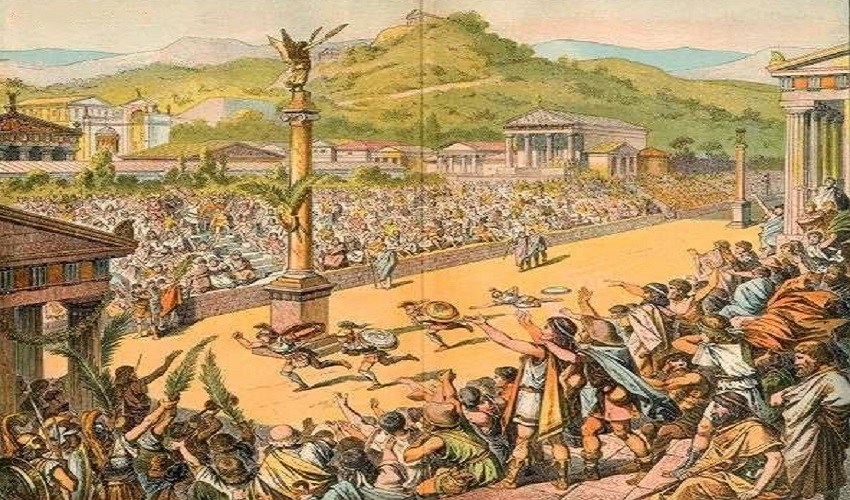
A Beautiful HistoryThe Olympic Games have a rich history that spans nearly three millennia, evolving from a religious festival in ancient Greece to the world's most prominent sporting competition today. The modern Games are rooted in this ancient tradition, but have adapted significantly over time to become the global spectacle they are now. Ancient Olympic Games (776 BCE – c. 393 CE) The ancient Olympics were held every four years at Olympia, Greece, a sacred site dedicated to the god Zeus. The first recorded games took place in 776 BCE, featuring a single event: the stade, a short footrace. Over the centuries, more events were added, including wrestling, boxing, chariot racing, and the pentathlon (a five-event competition). The ancient games were intrinsically linked to a religious festival and a period of truce, known as the ekecheiria or Olympic Truce, during which hostilities between Greek city-states were suspended to allow safe travel for athletes and spectators. Only freeborn Greek men were permitted to compete, and they typically did so in the nude, as a tribute to the gods. The last ancient Olympics were likely held around 393 CE, as the Roman Emperor Theodosius I issued an edict banning pagan festivals. Modern Olympic Games (1896 – Present) After a long hiatus, the Olympic Games were revived in the late 19th century through the efforts of French aristocrat Baron Pierre de Coubertin. He founded the International Olympic Committee (IOC) in 1894, and the first modern Olympic Games were held in Athens, Greece, in 1896. This inaugural event featured 280 male athletes from 12 nations competing in 43 events. The modern era has seen significant expansion and changes:
|