
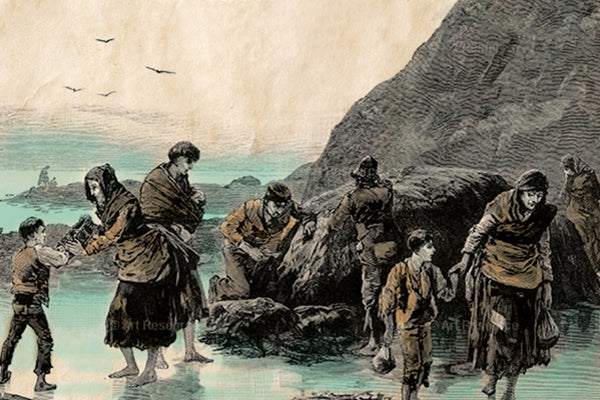
The Irish Potato FamineThe Great Irish Potato Famine, also known as the Great Hunger (An Gorta Mór), was a devastating period of mass starvation, disease, and emigration that fundamentally altered Ireland's history from 1845 to approximately 1852. The primary cause of the famine was the rapid and successive failure of the potato crop, which was the main source of sustenance for nearly half the population, particularly the rural poor. The culprit was an aggressive plant disease: the water mold Phytophthora infestans, or late blight, which arrived from North America and thrived in Ireland's cool, moist weather. The blight turned seemingly healthy potatoes into a black, rotten mush, often overnight, leaving tenant farmers who had little to no land for other crops completely destitute. The impact of the famine was exacerbated by the prevailing political and economic policies of the British government, which ruled Ireland at the time. British officials, influenced by the laissez-faire economic doctrine of the era, were slow to provide substantial aid and often implemented inadequate relief measures. For instance, even as the Irish people were starving, large quantities of grain, livestock, and dairy products were continuously exported from Ireland to Great Britain under military guard to pay rents to mostly English and Anglo-Irish absentee landlords. A controversial "Gregory clause" in the Poor Law further stipulated that anyone holding more than a quarter-acre of land was ineligible for public relief, forcing many to choose between their homes and food. The human cost of the Great Famine was catastrophic. An estimated one million people died from starvation or famine- related diseases like typhus and scurvy, while another one to two million people emigrated to North America, Britain, and Australia, creating a vast Irish diaspora. This mass exodus and death toll resulted in a dramatic population decline from approximately 8.4 million in 1844 to 6.6 million by 1851, a level from which Ireland's population has never fully recovered. The deep-seated trauma and perceived betrayal by the British government also intensified Irish nationalism and resentment of British rule, fueling the movement for independence in the following decades. |
 |