|
|
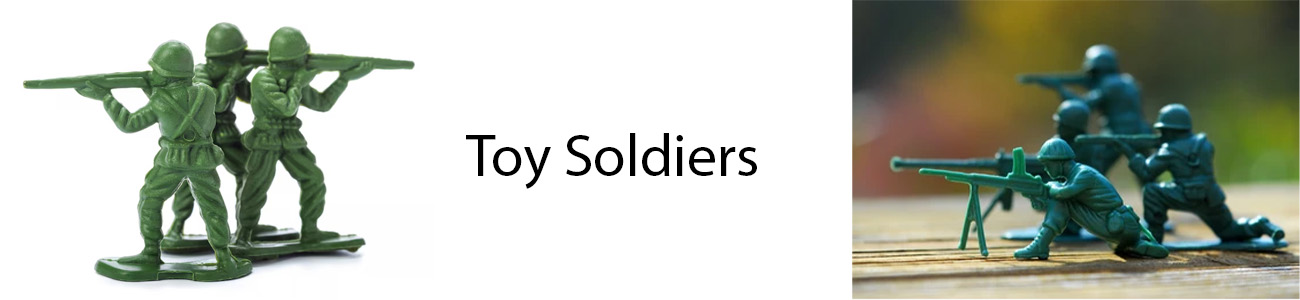
A toy soldier is a miniature figurine representing a soldier or other armed military personnel, dating back to ancient Egyptian tombs. These figures, intended for play and display, come in many forms, from simple, unpainted plastic army men to highly detailed metal collectibles.
Materials and history
- Early figurines were made from wood, porcelain, and silver for wealthy nobles and royalty.
- Tin and lead became popular materials for mass-produced soldiers in the 18th and 19th centuries. The 1893 invention of hollow-casting by the British company William Britain made metal soldiers cheaper and lighter.
- Plastic allowed for even more affordable, bulk production, leading to the iconic "little green army men" in the 1950s.
Common varieties
- Army men: Inexpensive, unpainted plastic soldiers molded in various action poses, most famously in green and tan.
- Hollow-cast metal: Figures cast from lead alloys, known for their detail and weight. The hollow design made them more economical to produce than earlier solid figures.
- Playsets: Large, boxed sets that often include two opposing armies, vehicles, buildings, and terrain features.
- Miniature models: Highly detailed, often hand-painted figures that are popular with adult collectors and tabletop wargamers.
|