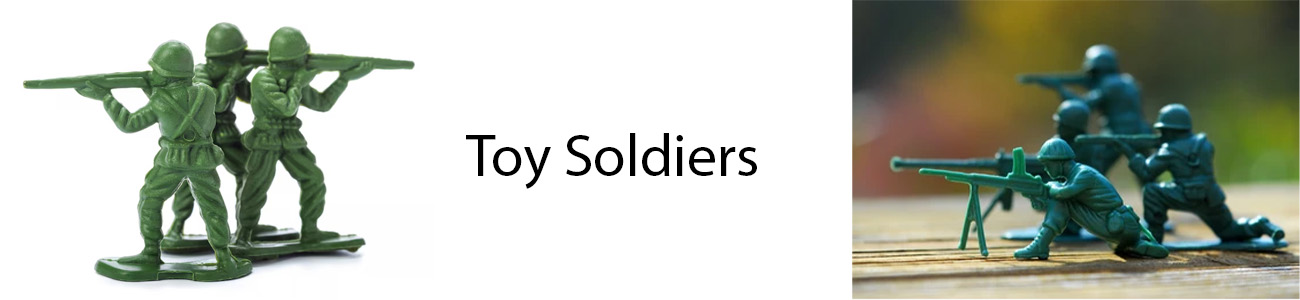
The history of toy soldiers stretches back thousands of years, evolving from ancient, high-status items into mass-produced, affordable playthings and sophisticated collectibles. The story of the toy soldier is a story of changing materials, manufacturing processes, and cultural attitudes toward war and play.
Ancient origins
- Early figures for nobility: Toy soldiers existed in ancient civilizations like Egypt, where miniature soldiers carved from wood, stone, and clay were placed in tombs. These early, handcrafted figures were typically playthings for the children of wealthy or royal families.
- Military use: Before they were common toys, miniature military figures were also used by generals and monarchs for planning battle tactics.
Rise of mass production in Europe
- 18th-century "flats": The mass production of toy soldiers began in 18th-century Germany. Inspired by Frederick the Great's army, tinsmiths created two-dimensional tin figures, known as "flats," by molding metal between two slate blocks.
- Pioneering factory: Johann Gottfried Hilpert established an early assembly line for these figures in Nuremberg in 1775.
- 19th-century solid figures: In the 1800s, solid, three-dimensional figures cast from lead alloy became popular, with German and French companies becoming major producers.
- W. Britain's innovation: In 1893, the British company William Britain revolutionized manufacturing with the invention of hollow-casting. This process used less metal, making the figures lighter and significantly cheaper to produce, and establishing the 54mm scale as an industry standard.
The 20th century: Plastic takes over
- "Dime-store" soldiers: The first distinctly American toy soldiers were hollow-cast metal figures sold for a few cents in five-and-dime stores starting in the 1920s.
- Rise of plastic: Following World War II, advancements in plastic manufacturing dramatically changed the industry. Plastic was safer, cheaper, and easier to produce than lead, paving the way for the iconic "army men".
- Louis Marx playsets: In the 1950s and 60s, Louis Marx & Co. became a dominant producer of plastic military figures and elaborate playsets, which featured soldiers, vehicles, and fortifications for reenacting historical battles.
- Anti-war sentiment: The Vietnam War era led to a decline in the popularity of military toys, with some manufacturers going out of business. Science fiction-themed action figures also began to compete with traditional military figures.
Modern era: Collectibles and wargaming
- Miniature wargaming: The modern hobby of miniature wargaming, where players use detailed figures in simulated battles, is widely attributed to author H.G. Wells and his 1913 book Little Wars.
- Sophisticated games: Following a period of slow growth, wargaming exploded in popularity in the 1970s and 80s with companies like Games Workshop launching fantasy and science fiction games like Warhammer.
- High-end figures: Today, many toy soldiers are not children's toys at all but highly detailed, collectible figures made from metal or resin. These "connoisseur" pieces feature precise, matte-finish paint jobs for display and serious collection.