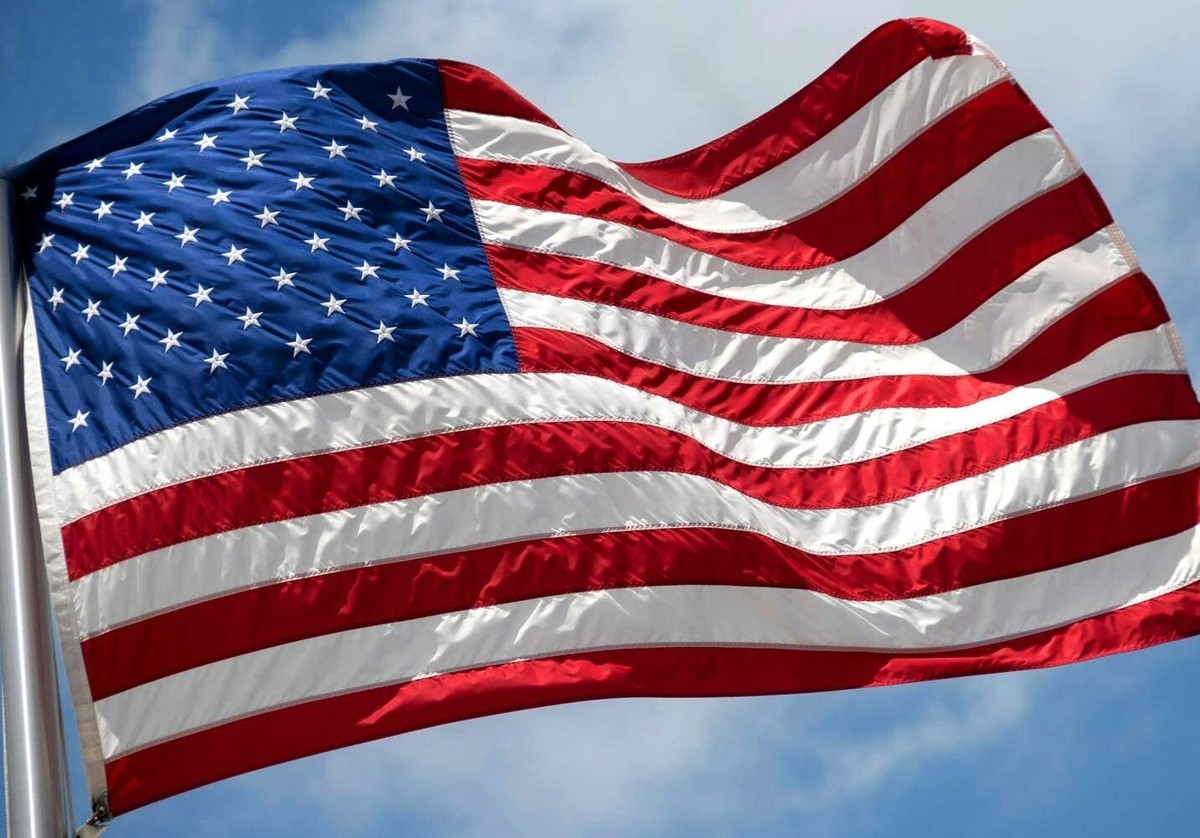
The national flag of the United States of America, often referred to as the American flag or the U.S. flag, consists of thirteen horizontal stripes, alternating red and white starting with red, with a blue rectangle in the canton bearing fifty small, white, five-pointed stars arranged in nine offset horizontal rows, where rows of six stars alternate with rows of five stars. The 50 stars on the flag form a constellation, representing the 50 U.S. states united, while the 13 stripes represent the thirteen British colonies that won independence in the American Revolutionary War.[2] The flag was created as an item of military equipment to identify U.S. ships and forts. It evolved gradually during early American history, and was not designed by any one person. The flag exploded in popularity in 1861 as a symbol of opposition to the Confederate attack on Fort Sumter. It came to symbolize the Union in the American Civil War; Union victory solidified its status as a national flag. Because of the country's emergence as a superpower in the 20th century, the flag is now among the most widely recognized symbols in the world. Well-known nicknames for the flag include "the Stars and Stripes", "Old Glory", "the Star-Spangled Banner", and "the Red, White and Blue". The Pledge of Allegiance and the holiday Flag Day are dedicated to it. The number of stars on the flag is increased as new states join the United States. The last adjustment was made in 1960, following the admission of Hawaii. The current design of the U.S. flag is its 27th; the design of the flag has been modified officially 26 times since 1777. The 48-star flag was in effect for 47 years until the 49-star version became official on July 4, 1959. The 50-star flag was ordered by then president Eisenhower on August 21, 1959, and was adopted in July 1960. It is the longest-used version of the U.S. flag and has been in use for over 66 years.[3]