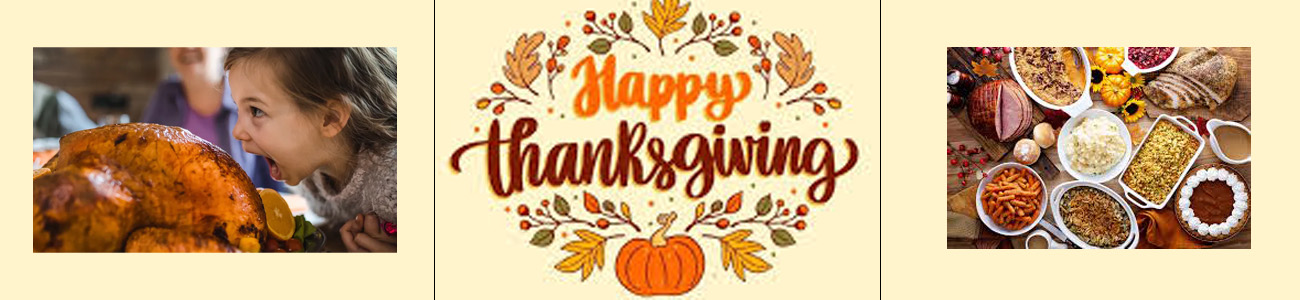
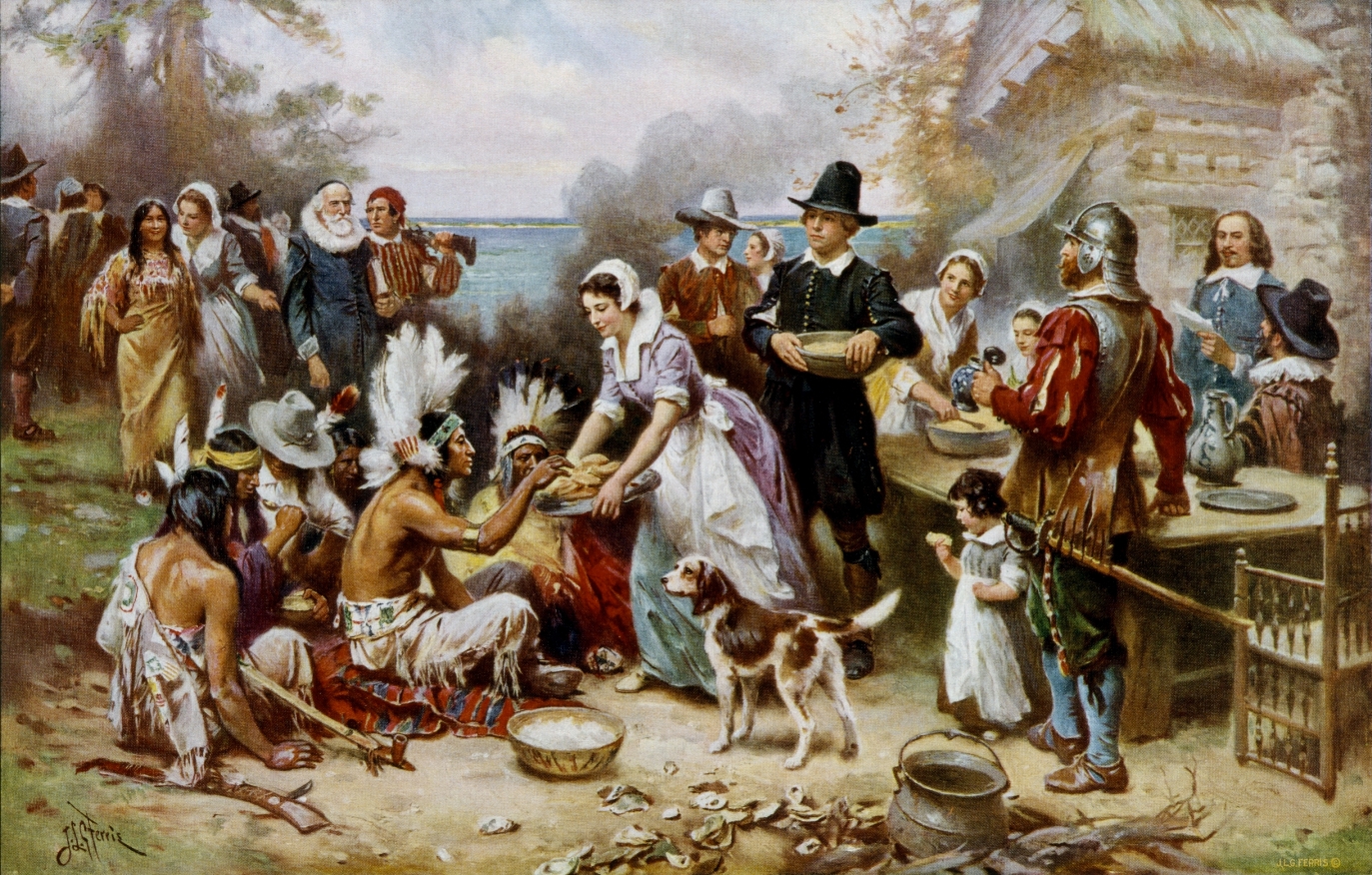
The First ThanksgivingThe event often referred to as the "First Thanksgiving" was a three-day harvest celebration held in the autumn of 1621 in Plymouth Colony (present-day Massachusetts). The 53 surviving English colonists (known today as Pilgrims) had endured a harsh first winter, during which nearly half of their group perished. Their survival was largely due to the help of the local Wampanoag people, particularly Tisquantum (Squanto), an English-speaking Native American who taught them how to plant corn, fish, and navigate their new environment. After their first successful harvest, Governor William Bradford organized a celebratory feast, inviting the Wampanoag leader Ousamequin (Massasoit) and his men to join them. Historical accounts of the event are limited to two primary sources, which indicate approximately 90 Wampanoag men joined the 50 or so colonists, outnumbering them significantly. The Wampanoag contributed five deer to the meal, which also likely included wild fowl (ducks, geese, possibly turkey), fish, shellfish, cornmeal, squash, and nuts. The event was a secular harvest festival and diplomatic gathering, not a formal "Thanksgiving" in the religious sense of the era (which would have been a day of fasting and prayer). The peace established during this time, sealed by a treaty between the two groups, lasted for approximately 50 years. However, the idealized historical narrative often glosses over the tensions and subsequent conflicts that arose as more European settlers arrived and tensions escalated, culminating in King Philip's War in the 1670s. For some Native Americans, Thanksgiving is a complicated reminder of the devastating impact of colonization, and many observe it as a National Day of Mourning. The Evolution of the HolidayAfter the 1621 event, "thanksgivings" in the colonies were observed as occasional days of prayer and fasting, proclaimed by colonial or state leaders to give thanks for specific blessings like military victories or the end of a drought. During the American Revolution, the Continental Congress issued several national thanksgiving proclamations. President George Washington issued the first presidential proclamation in 1789, designating November 26 as a national day of thanks, but subsequent presidents, such as Thomas Jefferson, often left such observances to the states, citing a belief in the separation of church and state. The push for an annual, national Thanksgiving holiday was largely driven by Sarah Josepha Hale, a magazine editor who campaigned for decades through letters and articles. Her efforts finally succeeded in 1863, during the Civil War, when President Abraham Lincoln declared a national Thanksgiving Day to be celebrated on the last Thursday in November. Lincoln saw the holiday as a way to unite a war-weary nation and promote a sense of shared gratitude and national identity. For several decades, the date of Thanksgiving was set annually by presidential proclamation. In 1939, President Franklin D. Roosevelt attempted to move the date a week earlier to lengthen the Christmas shopping season and boost the economy during the Great Depression, an act that caused national confusion and led to some states celebrating on different days ("Franksgiving"). To end the ongoing confusion, Congress passed a joint resolution in 1941, and in 1942, Roosevelt signed a bill officially establishing the fourth Thursday in November as a fixed federal holiday. Thanksgiving TodayToday, Thanksgiving in the United States is a blend of historical reflection and modern cultural practices. While its origins are rooted in a specific historical harvest feast, the modern celebration has evolved into a secular holiday focused on family, food, and gratitude. It is a major travel day, as family members gather, often traveling long distances to be together. Charitable activities, such as volunteering at food banks or serving meals to the less fortunate, are also common acts of giving back. The traditional meal remains the centerpiece of the holiday. While the 1621 feast included venison and various wild fowl, the modern menu typically features a roasted turkey, often with stuffing, mashed potatoes, gravy, cranberry sauce, and pumpkin pie. These dishes, many of which have New England origins, became staples as the holiday became a national tradition in the 19th century. Beyond the dinner table, modern traditions include watching parades, most famously the Macy's Thanksgiving Day Parade in New York City, which began in 1924. American football is another major element of the day, with professional and college games often broadcast throughout the afternoon and evening. The holiday also marks the unofficial start of the holiday shopping season, with "Black Friday" sales beginning the very next day. |
 |