Early Thanksgivings and Colonial Roots
Days of "thanksgiving" were common in the English colonies of North America long before the modern holiday was established, typically proclaimed as solemn days of prayer and fasting to thank God for specific blessings such as military victories, the end of a drought, or a safe journey.
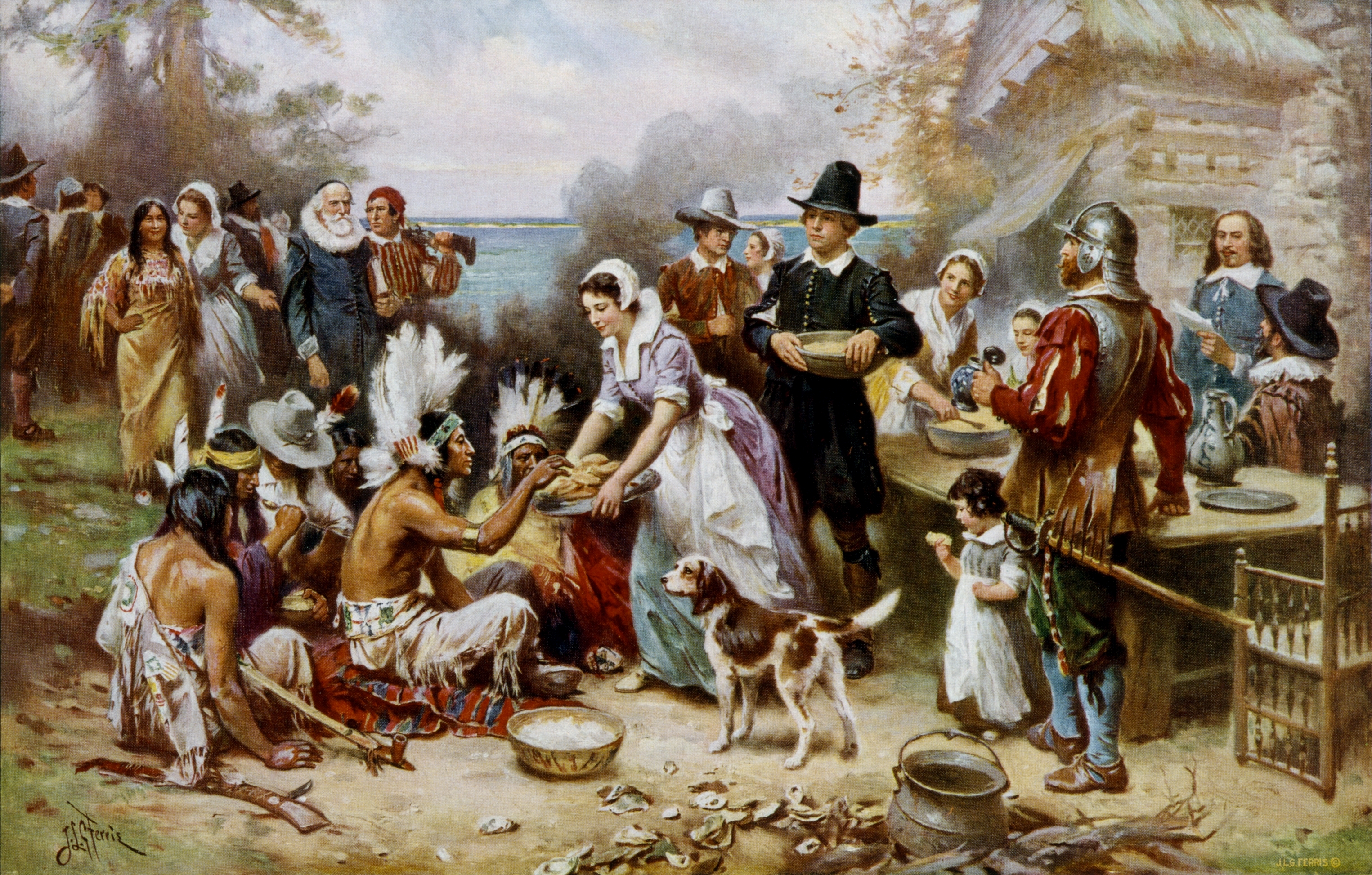
The event most Americans model their holiday on is the 1621 harvest feast shared between the English Pilgrims of Plymouth Colony and the Wampanoag people. After a brutal first winter that killed half the colonists, the remaining settlers, aided by Native Americans like Squanto who taught them local farming and fishing techniques, enjoyed a successful harvest. Governor William Bradford organized a three-day celebration, attended by about 50 colonists and 90 Wampanoag men, including Chief Massasoit. The Wampanoag contributed venison to a meal that likely included wild fowl, fish, stews, and vegetables, but not the pies and desserts common today, as the Pilgrims lacked sugar and ovens. This gathering was a harvest festival and a diplomatic gathering to solidify an alliance, rather than a "thanksgiving" in the religious sense of the time.
From State to National Holiday
For over two centuries, days of thanksgiving were celebrated by individual colonies and states on varying dates. After the American Revolution, President George Washington issued a national Thanksgiving proclamation in 1789, but subsequent presidents largely left the observance to the states.
The push for a fixed, national Thanksgiving holiday was largely the result of a 36-year campaign by Sarah Josepha Hale, a persistent magazine editor and writer (author of "Mary Had a Little Lamb"). She wrote countless editorials and letters to governors, senators, and presidents, envisioning a unified, patriotic holiday centered on home and family that could help bridge growing sectional divisions in the mid-19th century.
Her efforts finally succeeded in 1863, during the height of the Civil War, when President Abraham Lincoln proclaimed a national day of thanksgiving to be held on the last Thursday of November. Lincoln's proclamation, written by Secretary of State William H. Seward, called upon Americans to give thanks for their blessings and to "heal the wounds of the nation". This established an annual presidential precedent that continued for decades.
The Modern Date and Native American Perspectives
In 1939, President Franklin D. Roosevelt attempted to move the date earlier to the third Thursday of November to extend the Christmas shopping season and boost the economy during the Great Depression. This decision, dubbed "Franksgiving," caused controversy and was not universally adopted by all states. To end the confusion, Congress passed a joint resolution in 1941, and in 1942 Roosevelt signed a bill officially mandating that Thanksgiving Day would be observed on the fourth Thursday in November.
For many Native Americans, the traditional narrative of a harmonious feast masks the subsequent history of conflict, disease, oppression, and land theft that followed European settlement. Since 1970, many Native Americans have gathered on Thanksgiving Day for a "National Day of Mourning" in Plymouth, Massachusetts, to honor their ancestors and protest the glorification of a painful history.