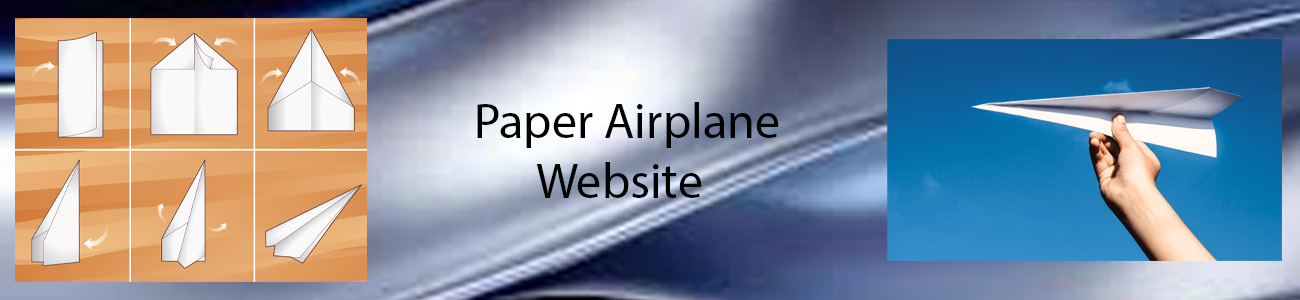
Paper Airplanes are better than real ones. For play. Not flying.
Thrust: The forward movement provided by the "pilot's" launching throw.
Lift: The upward force created as air moves over the wings. Since paper is flat, lift is primarily generated by the angle of attack (tilting the wings slightly upward).
Drag: Air resistance that pushes back against the plane, slowing it down.
Gravity (Weight): The force pulling the plane toward the Earth. Primary Types Darts: These are narrow, arrow-shaped designs built for speed and distance. They handle high-thrust launches well but have less lift.
Gliders: Featuring wider wings, these designs are optimized for time aloft (duration). They float slowly and often fly in gentle circles.
Historical & Practical Uses Origins: While paper folding (origami) has existed for centuries in China and Japan, the modern "paper airplane" gained significant recognition in the late 19th century alongside early aviation experiments.
Engineering Tools: Aviation pioneers, including the Wright brothers and Jack Northrop, used paper models to test wing shapes and flight stability before building full-scale aircraft. Education: Today, they are widely used in STEM education to teach students about physics, aerodynamics, and the scientific method.
The other two pages will show 2 paper airplane designs!