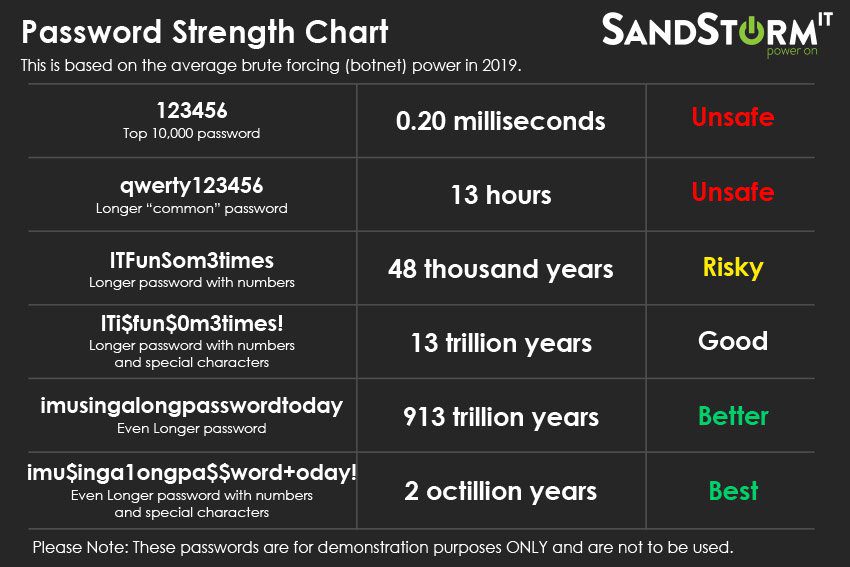
| 1. Prioritize Length Over Complexity Current security standards from NIST (National Institute of Standards and Technology) emphasize that length is the most critical factor in resisting automated attacks. Target: Aim for at least 12–16 characters. Passphrases: Use 4–7 random, unrelated words (e.g., Tulip-River-Orange-Satellite). These are easier for humans to remember but incredibly hard for computers to crack. 2. Avoid Predictable Patterns Avoid anything that can be found through a quick search of your social media or public records. No Personal Info: Skip names (pets, children, spouses), birthdays, anniversaries, or street addresses. No Sequences: Avoid keyboard patterns like "qwerty" or "12345". No Common Substitutions: Modern "dictionary attacks" already check for obvious swaps like P@ssw0rd! or adding a 1 at the end. 3. Use the "Tool-Assisted" Approach The only way to maintain a unique, 16-character password for every account is to stop relying on your brain alone. Password Managers: Use a trusted password manager to generate and store random, complex strings. This ensures you only need to remember one strong "Master Password" while all other accounts have unique, un-crackable credentials. Never Reuse: This is the most important rule. Reusing one password for multiple sites creates a domino effect where a single breach at a minor site can lead to the compromise of your email or bank account. 4. Layer Your Defense A strong password is your first line of defense, but it shouldn't be the only one. Multi-Factor Authentication (MFA): Always enable MFA, especially for sensitive accounts like email and banking. Even if a hacker steals your password, they still won't be able to access your account without that second code or biometric check. Passkeys: Where available, consider switching to passkeys—a new technology that replaces passwords entirely with secure device-bound authentication like FaceID or a fingerprint. |
 |