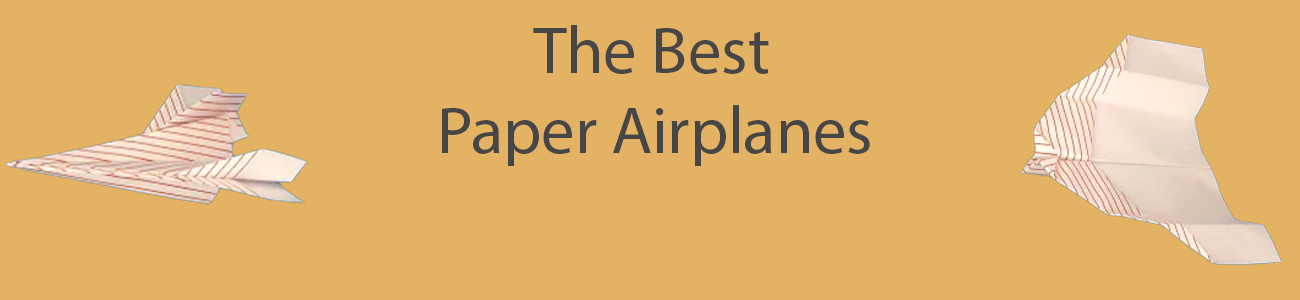
The Best Paper Airplanes In The World
A paper plane (also known as a paper airplane or paper dart in American English, or paper aeroplane in British English) is a toy aircraft, usually a glider, made out of a single folded sheet of paper or paperboard. It typically takes the form of a simple nose-heavy triangle thrown like a dart.[1]
The art of paper plane folding dates back to the 19th century, with roots in various cultures around the world, where they have been used for entertainment, education, and even as tools for understanding aerodynamics.
The mechanics of paper planes are grounded in the fundamental principles of flight, including lift, thrust, drag, and gravity. By manipulating these forces through different folding techniques and designs, enthusiasts can create planes that exhibit a wide range of flight characteristics, such as distance, stability, agility, and time aloft. Competitions and events dedicated to paper plane flying highlight the skill and creativity involved in crafting the perfect design, fostering a community of hobbyists and educators alike.
In addition to their recreational appeal, paper planes serve as practical educational tools, allowing students to explore concepts in physics and engineering. They offer a hands-on approach to learning, making complex ideas more accessible and engaging. Overall, paper planes encapsulate a blend of art, science, and fun, making them a unique phenomenon in both childhood play and academic exploration.
Paper airplanes are known to have been made as far back as the mid 19th century, based on an American children's book describing their construction from 1864.[2]
The construction of a paper airplane, by Ludwig Prandtl at the 1924 banquet of the International Union of Theoretical and Applied Mechanics, was dismissed as an artless exercise by Theodore von Kármán:[3]
Prandtl was also somewhat impulsive. I recall that on one occasion at a rather dignified dinner meeting following a conference in Delft, Holland, my sister, who sat next to him at the table, asked him a question on the mechanics of flight. He started to explain; in the course of it he picked up a paper menu and fashioned a small model airplane, without thinking where he was. It landed on the shirtfront of the French Minister of Education, much to the embarrassment of my sister and others at the banquet.
In recent times, paper model aircraft have gained great sophistication, and very high flight performance far removed from their origami origins, yet even origami aircraft have gained many new designs over the years, and gained much in terms of flight performance.
There have been many design improvements, including velocity, lift, propulsion,[4] style, and fashion over subsequent years.