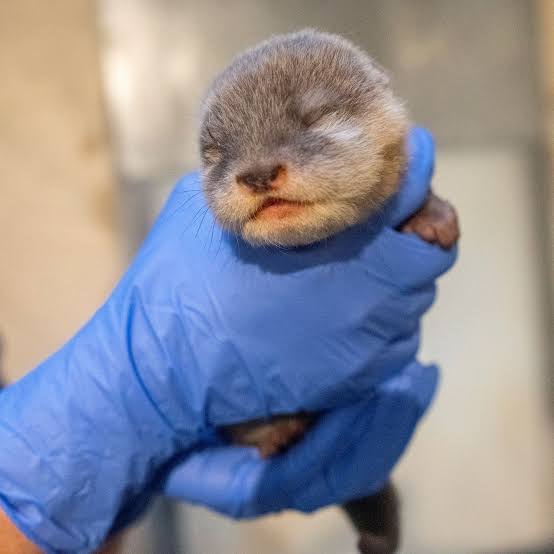
The river otter
and sea otter
represent nature’s perfect blend of playful agility and evolutionary engineering, thriving at the boundary of water and land.
The River Otter: Ribbon of the Rivers
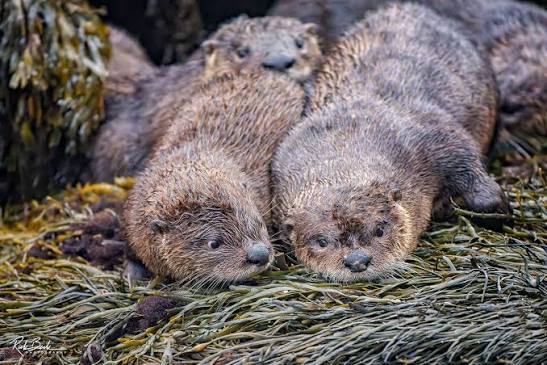
In the dappled light of freshwater streams and estuaries, the river otter moves like a fluid ribbon. Its body is long, cylindrical, and exceptionally muscular, tapering seamlessly into a thick, flattened tail that acts as a powerful rudder. Every movement on land is a series of low-slung, undulating bounds, but the moment it slides into the water, it transforms into pure hydrodynamic grace.
The coat of a river otter is a rich, glossy chestnut brown, so dense that water rarely touches its skin. Underneath this outer layer lies a trap of insulated air, keeping the creature warm in near-freezing currents. Its face is broad and whiskers—called vibrissae—fringe its snout like a stiff mustache. These whiskers are highly sensitive radar arrays, detecting the slightest vibrations of fleeing trout or crayfish in murky depths. Watch them for a moment, and you will see an animal that seems to treat the physical world as a playground, sliding down muddy banks on their bellies just for the sheer exhilaration of momentum.
The Sea Otter: Guardian of the Kelp
Farther out, where the Pacific ocean crashes against rocky coastlines, lives the sea otter. Heavier and more robust than its freshwater cousin, the sea otter is a true marine mammal, often spending its entire life at sea. Lacking the thick blubber of whales or seals, it survives the frigid ocean through a superpower: the densest fur in the animal kingdom, with up to one million hairs per square inch.
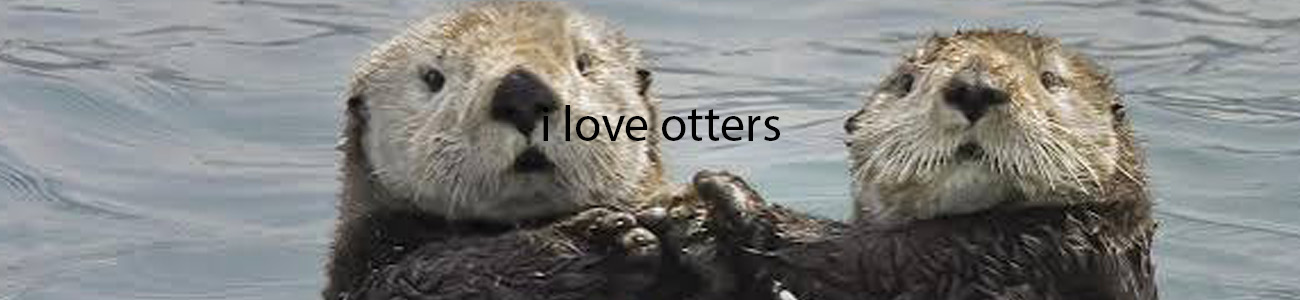
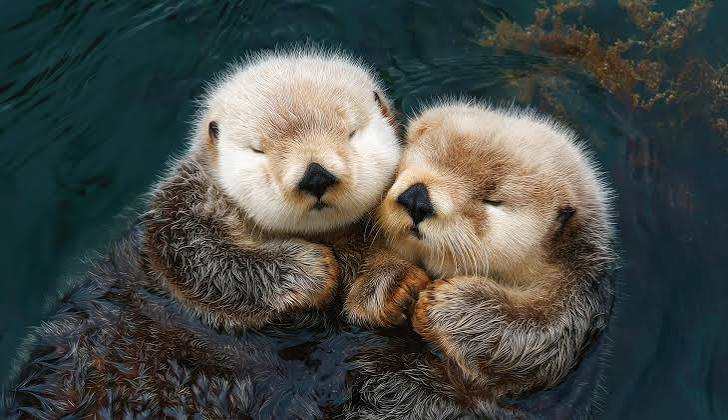
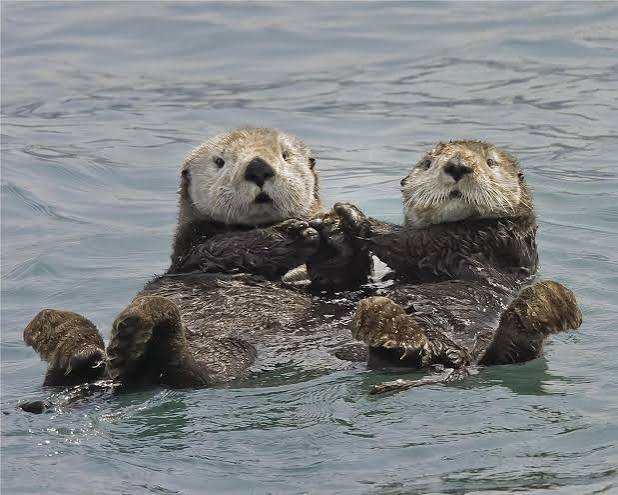
A sea otter's life is viewed from the back. They float effortlessly on their spines, paws draped resting over their chests or folded over their eyes to block out the midday sun. Their hind feet are large, webbed flippers that propel them down into dark kelp forests to hunt for sea urchins, crabs, and clams. Upon surfacing, they transform their chests into a dining table. They are one of the few mammals to use tools, often placing a flat stone on their bellies and hammering hard-shelled prey against it until it cracks open.
There is an enduring tenderness to their social lives. To avoid drifting away in the rolling ocean swells while they sleep, sea otters will wrap themselves in long strands of giant kelp, anchoring themselves to the seafloor. In large groups called rafts, they can often be seen holding paws—a living chain of warmth and companionship against the vast, indifferent sea.