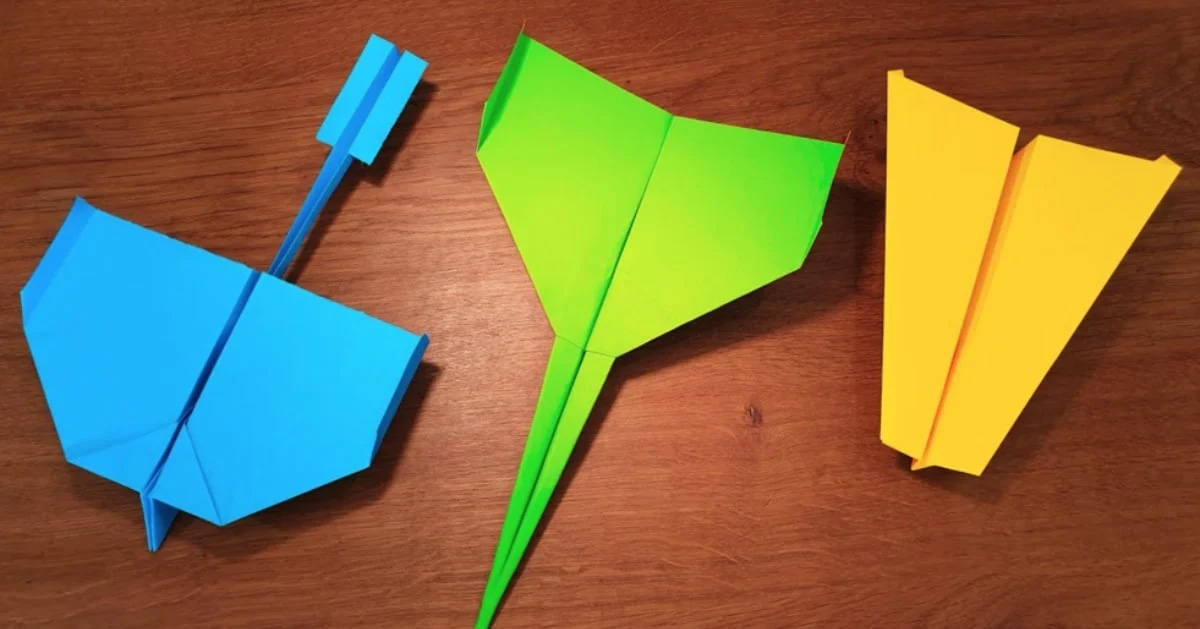
Paper airplanes don’t have a single inventor—they kind of evolved along with human flight dreams ✈️
-
Ancient China (around 200 BCE):
The earliest roots trace back to paper kites. Once paper existed, people started experimenting with how flat sheets move through air. -
Renaissance Europe (1400s–1500s):
Leonardo da Vinci sketched flying machines and is believed to have made paper models to test his ideas about aerodynamics. -
1800s:
Aviation pioneers like Sir George Cayley used small gliders and paper models to study lift and wing shapes. Paper was a cheap way to experiment. -
Early 1900s:
Before powered flight took off, inventors (including the Wright brothers) used paper and cardboard models to test designs. -
Mid-20th century:
The modern paper airplane as a toy really took off after World War II, when aviation fascinated the public and paper folding became popular worldwide.
So paper airplanes sit at the crossroads of play, science, and early aviation—a simple toy with surprisingly deep roots.